First time flying? A calm, step-by-step guide to your first flight
Flying for the first time and feeling nervous? Here is what happens from check-in to landing, the sounds and feelings to expect, and simple tips to make your first flight calm.
Your first flight is a lot of new things at once: a busy airport, a security line, a loud takeoff, and a cabin full of people who seem to know exactly what they are doing. Feeling nervous is normal. Most of that nervousness comes from not knowing what happens next, and that part is easy to fix.
Practical answer
- Check in online the day before and save your boarding pass to your phone.
- Pack your carry-on for security: liquids in small containers in one clear bag, laptop easy to reach.
- Arrive early so nothing feels rushed. Your airline says how early on its website.
- Pick a seat over the wing if you can: it is the smoothest part of the plane in bumps.
- Tell the crew it's your first flight when you board. They hear it often and are happy to help.
- Expect a few strong sensations: the push of takeoff, the ears popping, a few bumps. All of them are normal.
- Breathe slowly (in for 4, out for 6) whenever you feel tense.
How safe is flying, really?
Very. IATA's figures for 2024 show about one accident for every 880,000 flights. Commercial aviation runs on checklists, two trained pilots, and aircraft built with large safety margins. If the numbers help you, read the real chances of a plane crash.
The airport, step by step
- Check-in and bags: if you checked in online and only have a carry-on, you can go straight to security. If you have a bag to check, drop it at your airline's counter first.
- Security: you show your ID and boarding pass, then put your bags, jacket and some items in trays. In the US, the TSA asks that liquids in your carry-on be 3.4 ounces (100 ml) or less per container, in one quart-sized bag. Officers give clear instructions, and it is fine to ask them to repeat.
- Finding your gate: the screens show your flight number, gate and status. Gates can change, so check the screens again after security.
- Boarding: the gate agent calls groups by number. Your group is on your boarding pass. When it's called, show your pass and walk onto the plane.
Arriving early is the single best thing for first-flight nerves. Having time for a coffee near your gate feels completely different from running through the terminal.
What you will hear and feel on board
Nobody tells first-time flyers about the noises. Here are the common ones, in order:
- Thuds and whirs at the gate: cargo doors closing and bags loading below you.
- A chime: crew communicating with each other. It is routine.
- The engines spooling up: a rising roar before takeoff, then a firm push back into your seat. That push is the plane gaining speed, exactly as planned.
- A clunk after takeoff: the landing gear folding away.
- The engines getting quieter a few minutes after takeoff: the pilots reducing power after the climb. It does not mean anything is wrong.
- Ears popping: cabin pressure changes as you climb and descend. Swallowing, yawning or chewing gum helps the ears adjust, and MedlinePlus advises staying awake as the plane prepares to land so you can keep doing it.
- Bumps: that's turbulence, moving air the plane rides through. It feels dramatic from your seat, but it is a comfort issue, not a danger to the aircraft. The FAA's main advice is simple: keep your seat belt fastened whenever you're seated. Read is turbulence dangerous? before you fly.
If you want to know whether your route is likely to be bumpy, check the turbulence forecast for your flight the day before.
Choosing your seat
- Over the wing: the plane moves least here, so bumps feel smaller. See the best seat for turbulence.
- Window: good if you like seeing the ground and the horizon, which can help with motion.
- Aisle: good if you feel trapped easily or want to stand up without asking anyone.
- Near the front: often a little quieter, and you leave the plane sooner.
There is no wrong answer. Pick the one that matches what worries you most.
Small things that help a lot
- Download entertainment and a few meditations before you leave, in case the Wi-Fi is weak or paid.
- Eat something light before the flight and keep a water bottle (empty through security, filled after).
- Wear comfortable layers. Cabins can feel cool.
- Keep your ID, phone and boarding pass in one pocket you always check.
- Practice one breathing pattern in the days before, so it is automatic on board. Our breathing exercises for flying show you how.
If the nerves are strong
A first flight often comes with a big night-before worry. If that is you, follow the 24-hour plan for when you're flying tomorrow and panicking. If you're scared of panicking on board, read what to do during a panic attack on a plane in advance: knowing the steps makes panic less likely.
If your fear is intense enough that you are thinking of cancelling, you are not alone. The NHS describes phobias as treatable, and talking to a doctor or therapist about it is a reasonable step. A fear of flying course can also help before a big trip.
How FlyNest helps
- Know your fear: the flight pattern quiz shows what kind of nervous flyer you are and builds a plan around it.
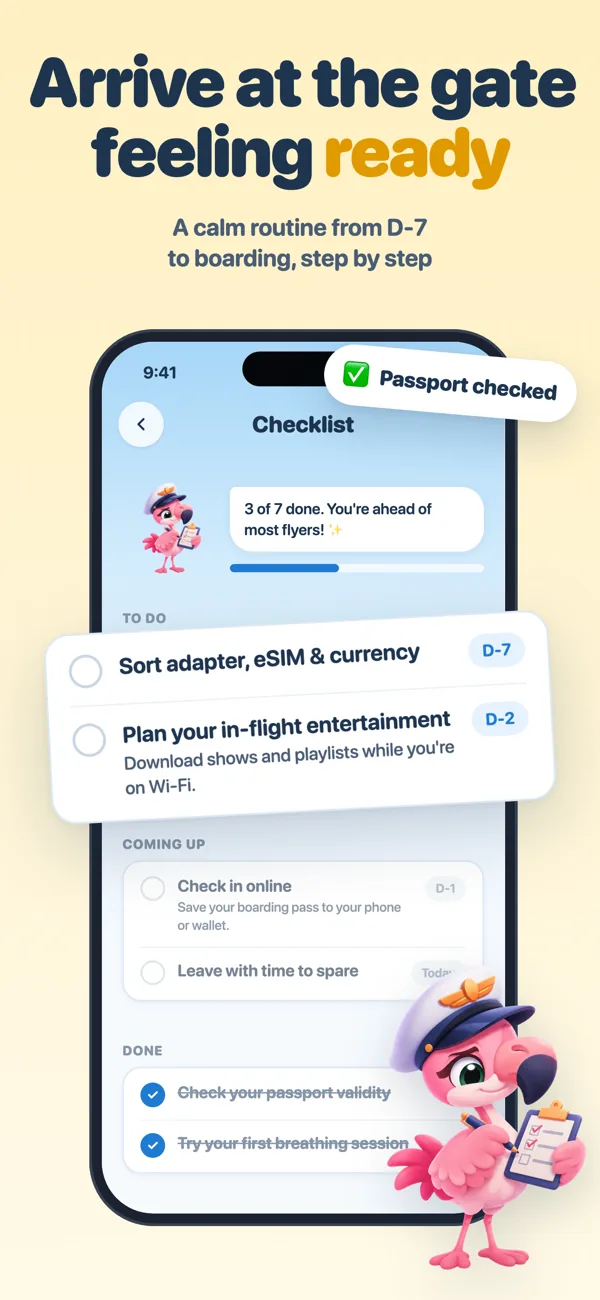
- The days before: a calm routine and an airport checklist, so nothing is left to the last minute.
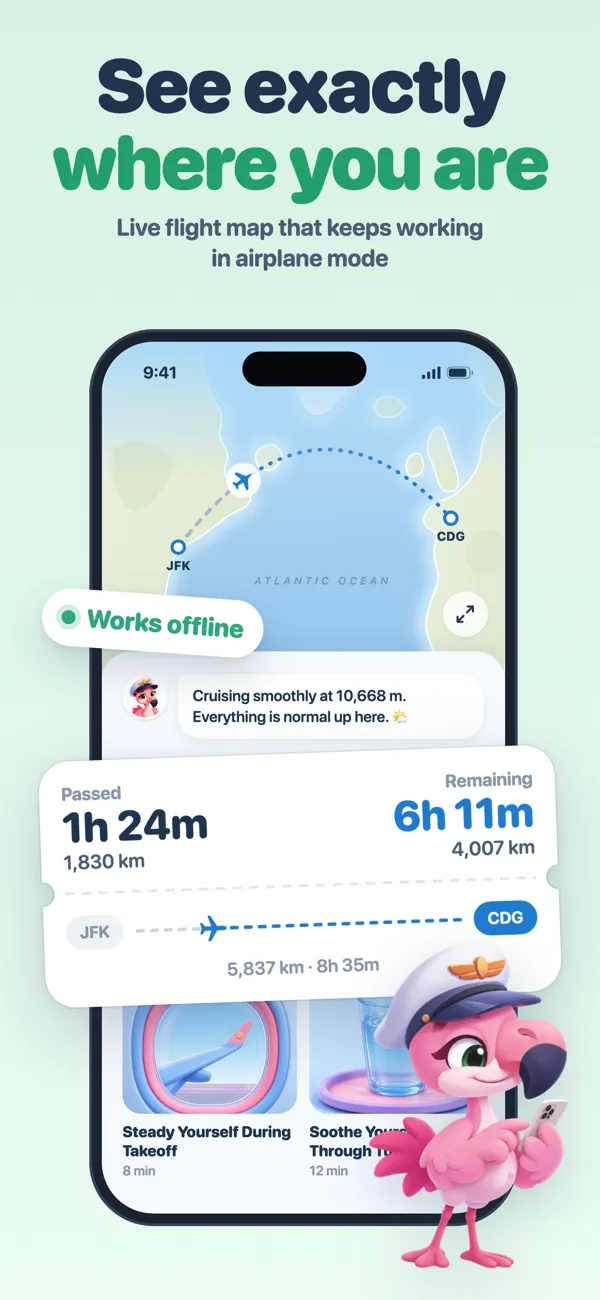
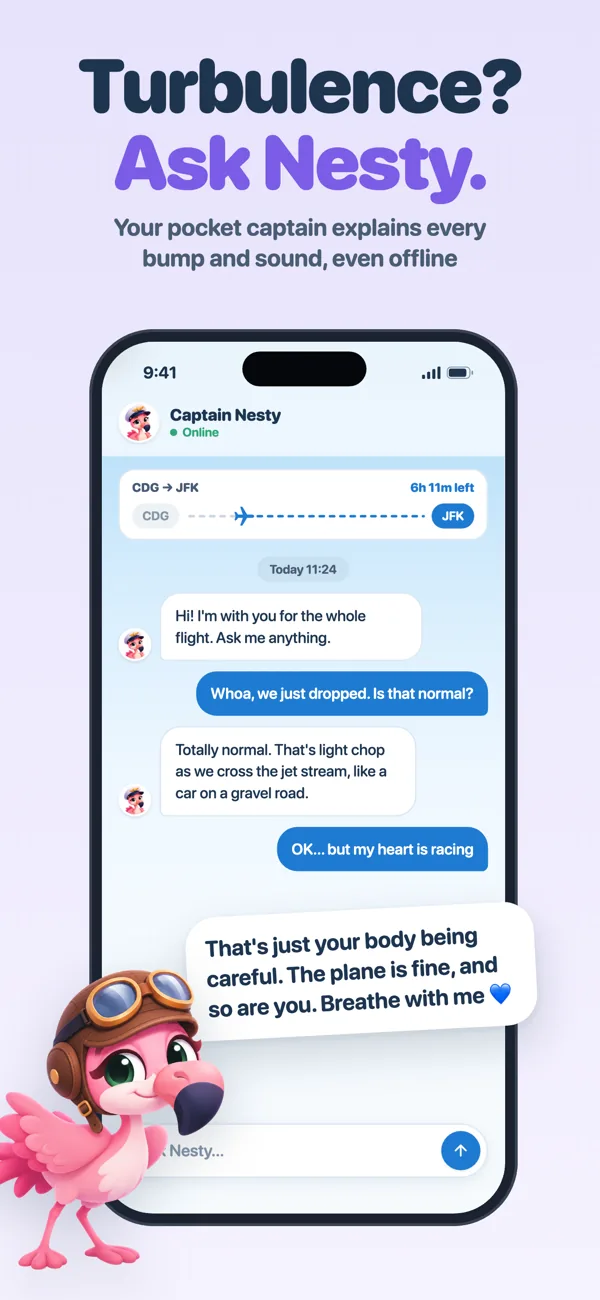
- On board: a live flight map that works offline, Nesty to explain any sound or bump, and guided breathing and meditations for takeoff, turbulence and landing.
- After landing: a "You made it!" moment, and a history of your flights so you can see your progress.
What FlyNest doesn't do
FlyNest doesn't replace your airline's app for boarding passes or gate changes, and it is not a treatment for a severe phobia. If your fear stops you from living the life you want, a therapist or a fear of flying course is the right next step, and FlyNest can sit alongside it on the day.
Frequently asked questions
Is it normal to be scared on your first flight?
Yes. Many first-time flyers feel nervous, mostly because everything is unfamiliar. Learning the order of events and the normal sounds removes most of the surprise.
What should I do when I get on the plane for the first time?
Find your seat (the row number and letter are on your boarding pass), put your bag in the overhead bin or under the seat in front of you, sit down and fasten your seat belt. Then watch the safety briefing.
What does takeoff feel like?
A strong push back into your seat as the plane speeds up, then a smooth lift as the nose rises. You may feel a gentle "floating" sensation when the climb levels off a bit. It lasts a few minutes, and then the ride usually settles.
Can I fly alone for the first time?
Yes, many people do. Doing the airport steps at home (online check-in, boarding pass on your phone) and arriving early makes flying alone much easier. Tell the crew it's your first flight if you'd like a little reassurance.
Will my ears hurt?
They may feel full or pop as the plane climbs and descends. Swallowing, yawning or chewing gum usually helps. If you have a bad cold, ask a doctor or pharmacist for advice before flying.