
Airplane noises during a flight: what each sound means
A clunk after takeoff, a whine from the wing, engines that suddenly go quiet, a roar after landing. Here are the normal airplane noises in the order you hear them, what makes each one, and how to stay calm when a new sound catches you.
A loud clunk right after takeoff. A whine from somewhere under the wing. The engines suddenly going quiet while you're still climbing. If a sound just made your heart jump, here is the most important thing: almost every noise you hear on a plane is a moving part doing a planned job, at the moment the crew planned it. Once you know what each sound is, most of them stop being scary and start being signposts that tell you where you are in the flight.
Practical answer
- A thud or clunk just after takeoff is the landing gear folding up into the plane.
- A whirring or grinding from the wings is the flaps moving, the panels that change the wing's shape for slow flight.
- Engines getting quieter after takeoff means the crew has reduced from takeoff power, as planned. It doesn't mean an engine stopped.
- A rumble or light shaking while descending is often the speed brakes, panels on top of the wing that add drag. The FAA says they usually bring "a certain amount of noise and buffeting".
- A loud roar after touchdown is reverse thrust helping the plane slow down on the runway.
- Chimes are the crew talking to each other, or the seat belt sign switching on or off.
Why noises feel so alarming
On a plane you can't see what's making a sound, you can't walk over to check, and you didn't choose when it happens. For an anxious mind, an unexplained noise fills the gap with the worst story. The fix isn't to stop hearing it. It's to have a name ready for each sound, so your brain gets an answer before it writes its own. That's what the rest of this page is for, in the order you'll hear things.
At the gate and while taxiing
- Thuds and bumps below you: bags and cargo being loaded, and cargo doors closing.
- Whirring and whining: big jets move their flaps, landing gear, spoilers and brakes with hydraulic power. The FAA's Aviation Maintenance Technician Handbook describes these systems, including a power transfer unit on some jets, a pump and motor joined by a shaft that passes hydraulic power from one system to another. Pumps and motors at work can whine, buzz or hum, sometimes in short bursts.
- A chime and the seat belt sign: in the US, 14 CFR 121.317 requires the "Fasten Seat Belt" sign to be on whenever the plane moves on the ground, and for every takeoff and landing. Each airline uses its own chime tones for the sign and for crew calls, so there's no single code to learn. A chime is routine.
- The flaps moving before takeoff: you may see the back of the wing slide out and down, with a whir. Flaps make the wing work better at low speed, and the Pilot's Handbook of Aeronautical Knowledge explains that they are extended when needed and tucked back into the wing when they're not.
Takeoff and climb
- The roar on the runway. This is takeoff power, the most the engines will work during the flight. It is supposed to be loud.
- Rumbling wheels, then sudden quiet underneath. That's the moment the wheels leave the runway.
- A clunk and a whoosh. The FAA's Airplane Flying Handbook says pilots retract the landing gear once the plane is clearly climbing, and that on some planes the gear doors briefly add drag while they open. You hear the doors, the wheels folding in and the doors closing again, often with a firm thump at the end.
- A whir from the wings a little later. The same handbook says the flaps should not be retracted until the plane has passed 400 feet above the ground, or a higher height set to clear obstacles. As they come in, in stages, you may hear the motors and feel a tiny sink as the wing changes shape.
- The engines go quieter. Pilots reduce from takeoff power once the plane is established in its climb. Many airports also have noise abatement procedures, standard departure profiles designed to limit noise over nearby neighbourhoods. The quieter engines are the plan, not a problem.
Cruise
Once the plane levels off, the sound settles into a steady rush of air and engine hum. Small changes are normal: the engine note shifts a little when the crew adjusts power or the plane climbs to a new altitude, and you may hear the air conditioning change. If a bump comes with a sound, it's the air, not the plane. Our page on turbulence anxiety explains why the body reacts so strongly to it. On a long crossing with only water below, the quiet hum can make the mind wander: our page on flying over the ocean shows how those routes are planned.
Descent and approach
- Very quiet engines. The handbook describes the smoothest descent as reducing power to flight idle. So when the plane starts down, the engines often go quieter than at any other point. It feels like gliding because, in a way, it is.
- A rumble and a light shake. If the crew needs to slow down or come down faster, they raise the speed brakes. The Airplane Flying Handbook says this usually comes with some noise and buffeting. If you're by the wing, you can see the panels lift on top.
- The whir of flaps again, now coming out in stages for the slower approach.
- A deep rumble and more wind noise. The landing gear going down, a few minutes before landing. Gear and flaps add drag, so the engines may get a little louder to hold speed. That's normal too.
- Circling instead of landing? That's usually a holding pattern, a queue in the sky. See why planes circle before landing.
Landing
- A thump. The wheels meeting the runway. Some touchdowns feel firmer than others, and that's normal.
- Panels popping up on the wing. These are spoilers. The handbook explains that they destroy most of the wing's lift after touchdown, which puts the plane's weight on the wheels so the brakes work better.
- A loud roar. Reverse thrust. Doors on the engines redirect the airflow forward to help slow the plane. The FAA says it works best at high speed, so pilots use it soon after touchdown. It sounds like the plane is speeding up, but it's doing the opposite.
- Quiet, then a chime. The plane slows to taxi speed, and later the seat belt sign goes off at the gate.
What to do when a sound worries you
- Name it. "That's the gear." "That's the flaps." Even a guess helps your brain stop searching.
- Look at the cabin crew. They hear these sounds on every flight. If they're calm and carrying on, that's real information.
- Breathe out longer than you breathe in. The NHS breathing exercise for stress uses slow breaths in through the nose and out through the mouth, counting as you go. Our breathing exercises for flying guide you through it.
- Ask. It's fine to ask a flight attendant what a sound was. If panic builds, follow the steps in what to do during a panic attack on a plane.
If you're flying for the first time, our first flight guide walks you through the whole day, from check-in to landing.
How FlyNest helps
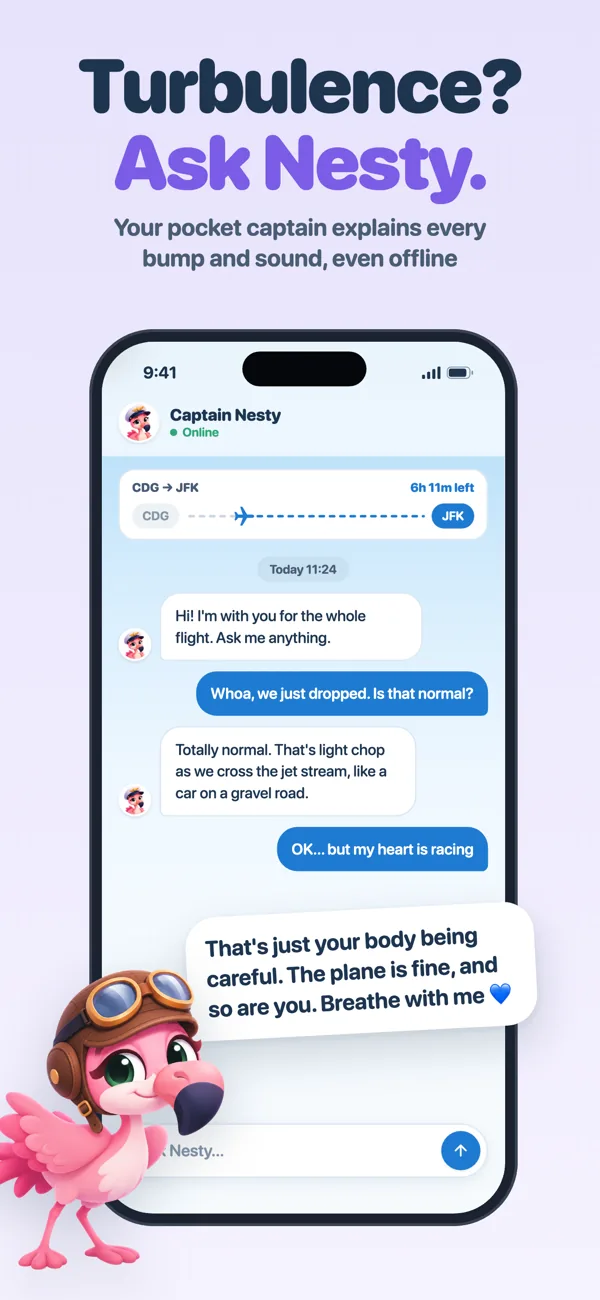
- Ask Nesty about any sound. "What was that clunk?" "Why did the engines go quiet?" Nesty, the app's pocket captain, answers in plain words, knowing your flight phase. See Ask Nesty, your pocket captain.
- A live flight map that works offline, so you can see whether you're climbing, cruising or descending, and match the sound to the moment. See the live flight map.
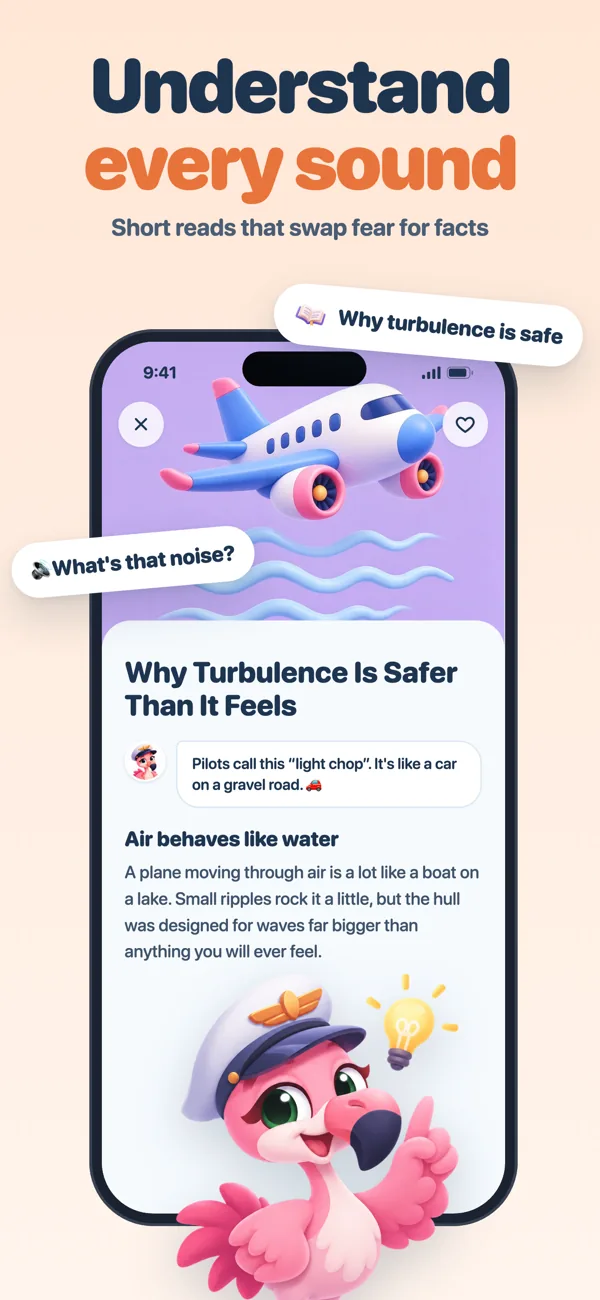
- Short reads about sounds, engines and turbulence in the app's library, to read before you fly.
- Guided breathing and meditations for takeoff, turbulence and landing, for when your body reacts before your mind can catch up.
What FlyNest doesn't do
FlyNest can't hear the sounds on your plane, and it doesn't know what the crew is doing in the cockpit. It explains what sounds usually mean at each phase of a flight. Your crew's announcements and instructions always come first. If fear of flying is affecting your life, a doctor or a therapist can really help.
Frequently asked questions
What is the loud clunk right after takeoff?
Usually the landing gear folding up into the plane, with its doors opening and closing. Pilots retract it once the plane is clearly climbing, so it comes a few seconds after the wheels leave the runway.
Why did the engines get quieter after takeoff?
The crew reduced from takeoff power to a climb setting, as planned. Many airports also use noise abatement procedures that limit noise over the neighbourhoods below. It doesn't mean an engine has stopped.
What is the whirring or grinding noise from the wing?
The motors moving the flaps, panels at the back of the wing that extend for takeoff and landing and retract for cruise. You'll hear them after takeoff and again before landing, often in a few short stages.
Why does the plane rumble and shake a little on the way down?
Often it's the speed brakes, panels on top of the wing that add drag to slow the plane or steepen the descent. The FAA notes they usually come with some noise and buffeting. The landing gear going down also adds rumble.
What is the roar after landing?
Reverse thrust. Parts of the engine redirect the airflow forward to help the plane slow down on the runway, which is loud for a few seconds.
What do the chimes on a plane mean?
Most chimes are the seat belt sign turning on or off, or crew members calling each other. Each airline uses its own tones. A chime on its own is routine.
Sources
- FAA, Airplane Flying Handbook (FAA-H-8083-3C), Chapter 16: Transition to Jet-Powered Airplanes
- FAA, Airplane Flying Handbook (FAA-H-8083-3C), Chapter 6: Takeoffs and Departure Climbs (Noise Abatement)
- FAA, Pilot's Handbook of Aeronautical Knowledge, Chapter 6: Flight Controls
- FAA, Aviation Maintenance Technician Handbook (FAA-H-8083-31B), Chapter 12: Hydraulic and Pneumatic Power Systems
- 14 CFR 121.317, Passenger information requirements
- NHS, Breathing exercises for stress