
How to help someone with a fear of flying (without making it worse)
Your partner, parent or friend is scared of flying and a trip is coming. Here is what to say, what to leave unsaid, how to plan the days before together, and what to do beside them on the plane.
Your family wants everyone to go this year, and one person goes quiet every time flights come up. Or it's your partner, who says yes to the trip and then stops sleeping the week before. You want to help, you've tried telling them how safe flying is, and it didn't land. And if you're the nervous one reading this because you always worry about holding someone back, stay: there is a section for you further down. You can't take the fear away for someone else, but how you act around it makes a real difference, before the trip and in the seat next to them.
Practical answer
- Believe them. The fear is real even when they know flying is safe.
- Skip the statistics. Say that you can see it's hard and that you're with them.
- Ask what helps, before the trip and not at the gate. Listen more than you advise.
- Plan the days before together, one small step at a time, and let them make the choices that matter to them, such as the seat.
- Help them do the flight, don't help them avoid it. Don't force it either: the decision stays theirs.
- On board, stay calm and ordinary. Breathe slowly with them if the fear rises.
- If the fear is shrinking their life, encourage them to talk to a doctor or a therapist, gently and more than once.
What it's like for them
Most nervous flyers have already heard the numbers. The US National Institute of Mental Health describes this well: adults with a phobia may realise their fear is irrational, and still, even thinking about the feared situation brings on severe anxiety. Knowing and feeling are two different things. Our guide on why knowing flying is safe doesn't stop the fear is written for that gap, and it's worth reading from your side too.
There is often shame on top of the fear. The NHS notes that when other people react badly to someone's panic or fear, the embarrassment can make the anxiety worse. A sigh, a joke or "you're being silly" doesn't shrink the fear. It teaches the person to hide it from you.
It is also more common than it looks. NIMH estimates that 12.5% of US adults have a specific phobia of some kind at some point in their lives, and the NHS lists flying among the typical ones. The person you love isn't broken or dramatic.
What to say, and what to leave unsaid
The NHS advice on supporting someone who is struggling is simple: tell them you've noticed, offer your time to listen, and don't force them to talk or to get help. "Just telling them you see their struggle can be important help", as its guide puts it.
Things that tend to help:
- "I can see this is really hard for you."
- "What's the worst part for you: the days before, takeoff, the bumps?"
- "What would make this flight a bit easier?"
- "I'm coming with you, whatever happens."
The NHS suggests open questions that start with "how", "what", "where" or "when", because they help people open up. Then let them answer without fixing it straight away.
Things that tend to backfire:
- "Flying is the safest way to travel." They know. It can sound like "your fear doesn't count".
- "Just relax" or "calm down". Nobody chooses this.
- "You're going to ruin the holiday." Guilt adds a second weight to the first.
- Teasing, or telling the story of their fear in front of other people.
"My family wants us all to go": plan it together
Anxiety about a flight often builds for days or weeks, and an empty wait is where it grows. Our page on anxiety before a flight explains why the wait can feel worse than the flight itself. As the person next to them, you can help give those days a shape:
- Decide together, early. Don't book in secret and announce it. Being part of the choice of flight and time of day gives back some control.
- Let them choose the seat. Some people want the aisle, some want the window, some want the wing. It's their call.
- Ask what they want from you on the day. Talk or silence? A hand to hold or space? Agree on a small signal that means "I need a minute".
- Practise slow breathing together a few times in the week before, so it's familiar on the plane.
- Look at what's out there. The NHS suggests checking whether airlines run sessions for people with phobias. We compare them in our fear of flying courses guide. On the British Airways course, a supporter can't sit in on the sessions but can buy a seat on the flight at the end.
Help them fly, don't fly around the fear
It's natural to want to remove everything that scares someone you love: cancel the trip, drive twelve hours instead, answer the same "are you sure it's safe?" for the tenth time. Researchers call these changes family accommodation. A 2016 review of 121 studies found that it is common around anxiety disorders and is associated with more severe symptoms and poorer outcomes. The NHS says something close in plainer words: avoiding situations, or relying on habits we think keep us safe, can make anxiety worse, while facing fears gradually helps.
So the useful question is not "how do I spare them this?" but "how do I help them do it?". A shorter first flight, a daytime departure, a seat they chose, you beside them: these make the flight easier to take, and they still take it.
The other side matters just as much. Don't push, trick or bargain someone onto a plane. The NHS is clear that you shouldn't force someone to talk or to get help. If they decide this trip isn't possible, that's a decision to respect, and a smaller step can come next.
On the day and on the plane
- Carry on as usual. The NHS points out that behaving differently around someone can make them feel more isolated. Be your normal self, at a normal speed.
- Leave early. A rushed airport makes everything louder.
- Don't watch them. Being checked every two minutes feels like being a problem. Stick to what you agreed.
- Don't announce it for them. Whether to tell a flight attendant that they're a nervous flyer is their choice.
- If the fear rises, breathe with them. The NHS breathing exercise is easy to do side by side: in gently through the nose, out through the mouth, counting from 1 to 5 each way, for at least 5 minutes.
- If it becomes a panic attack, stay calm and stay close. The NHS says panic attacks are frightening but not dangerous, and that most last between 5 and 20 minutes. Remind them quietly that it will pass. Our page on a panic attack on a plane goes through it step by step.
- After landing, notice it. Not a speech. "You did that" is enough.
"I always worry about holding him back": if you're the nervous one
If you're the one who is scared and you've read this far, you're probably carrying two things: the fear, and the feeling that you are the reason the family stays home. That second weight is heavy, and it isn't a fair description of you. A phobia is a recognised anxiety condition, not a lack of love or effort.
A few things you're allowed to do:
- Tell them what actually helps, even if it sounds small. People who love you usually want instructions.
- Send them this page if saying it out loud is hard.
- Say yes to the trip while still scared. You don't have to feel calm to get on the plane.
- Ask for one smaller step first if this trip is too much right now.
When to suggest more help
If they've turned down trips for years, if the dread starts weeks ahead, or if the fear is spreading to other parts of life, encourage them to speak to a doctor or a therapist. The NHS lists talking therapies such as cognitive behavioural therapy (CBT) among the treatments for phobias, and in England people can refer themselves to NHS Talking Therapies without seeing a GP. Our fear of flying therapy guide explains what treatment looks like. You can offer to help find someone or to go along to a first appointment. You can't make the call for them.
And look after yourself. The NHS reminds supporters that it can be upsetting to see someone you care about in distress, and that taking time for yourself is part of helping.
How FlyNest helps
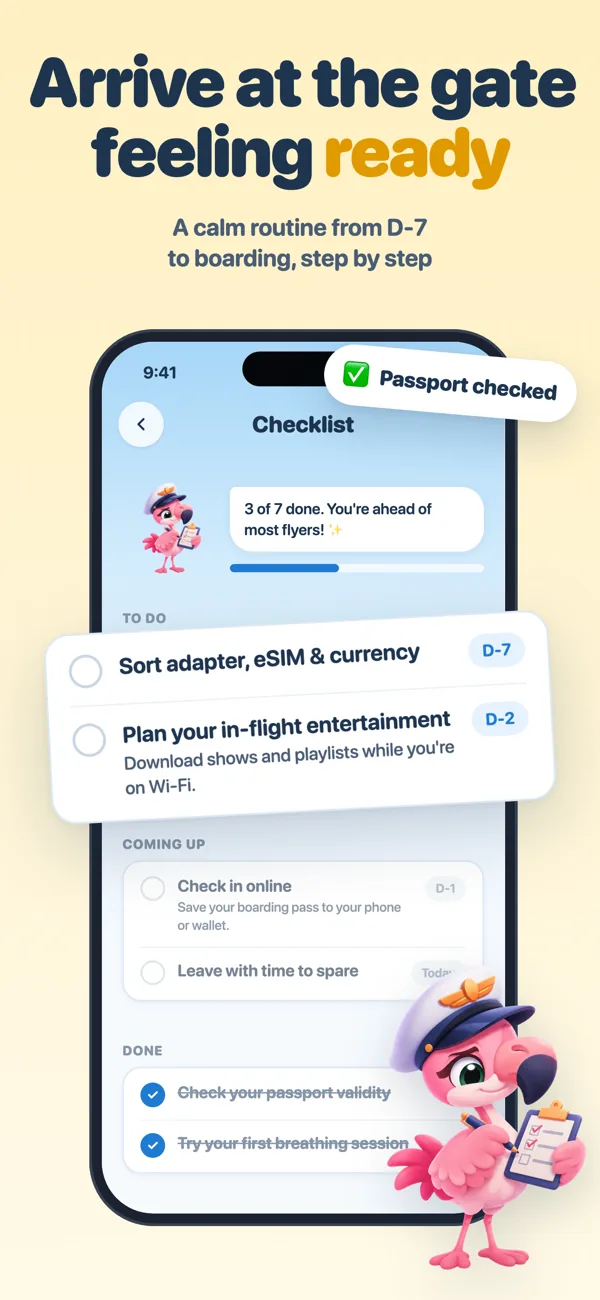
FlyNest lives on the nervous flyer's phone, but one part of it works well with two people: the get-ready routine. It runs from a week before the flight to boarding, one step at a time: when to choose the seat, when to start breathing practice, when to check the forecast, what to pack, and a meditation for the gate. Going through it together turns "are you going to be okay?" into "what's today's step?", which is an easier conversation for both of you.
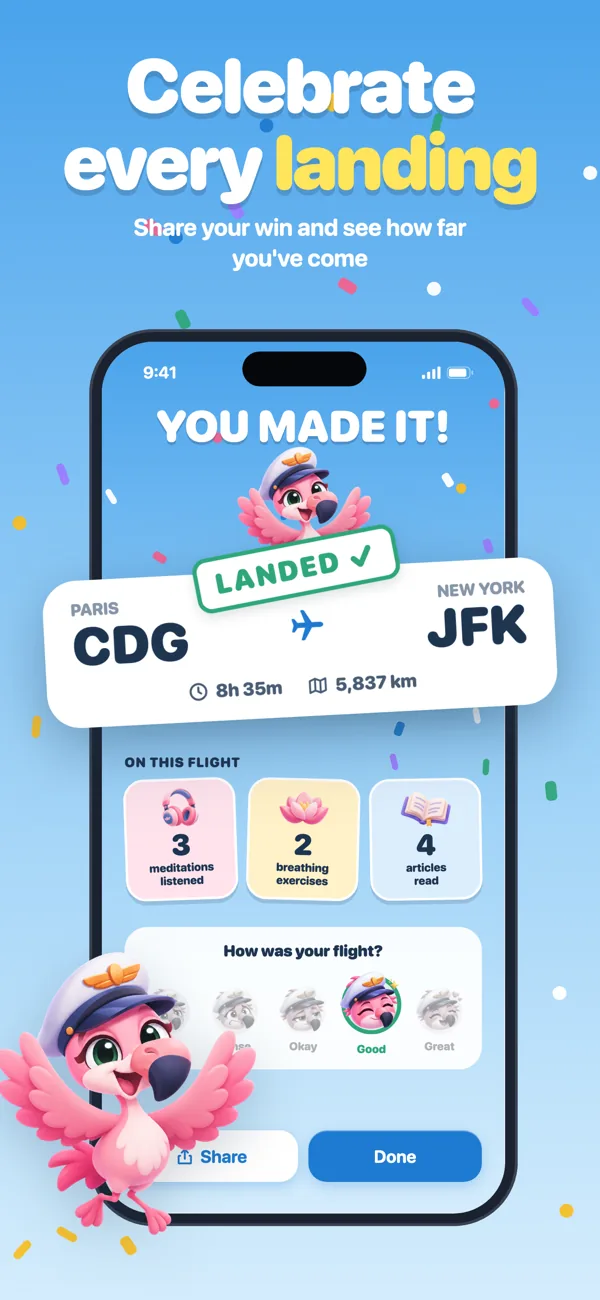
After landing, the app shows a "You made it!" screen and keeps a history of their flights. It's a small moment you can share, and a record that the trip they dreaded is one they got through.
What FlyNest doesn't do
FlyNest doesn't replace you, and it isn't a treatment for a phobia. It can't make someone ready to fly who isn't, and it won't make the fear disappear. It gives the days before a structure and gives the flyer tools for the seat. If the fear is severe, a doctor or a therapist is the right next step, and the app can sit alongside that help.
Frequently asked questions
What do you say to someone who is scared of flying?
Start by showing you take it seriously: "I can see this is hard for you." Then ask an open question, such as what the worst part is or what would help, and listen. Avoid statistics, "just relax" and jokes. They've heard the numbers, and feeling judged tends to make anxiety worse.
Should I tell them how safe flying is?
Once, if they ask. Most nervous flyers already know, and the fear comes anyway. Repeating the facts can sound like you're dismissing the feeling. It usually helps more to say you believe them and to ask what they need.
Should I push my partner to fly?
No. Encourage, don't force. Avoiding flights can keep the fear going, so it's worth helping them take a manageable step, such as a short flight with you beside them. But the decision has to stay theirs, and pressure or surprises usually add to the fear.
How do I calm someone down on a plane?
Stay calm yourself, speak quietly and breathe slowly with them: in through the nose and out through the mouth, counting from 1 to 5 each way, for a few minutes. Remind them that the feeling will pass. Don't crowd them or draw attention to them.
My family wants us all to go and I'm the scared one. What can I do?
Tell one person exactly what helps you, and plan the days before with them so you're not carrying it alone. You don't need to feel calm to say yes. If this trip is too much, suggest a smaller step first, and consider talking to a doctor or a therapist.
Can a fear of flying be treated?
Yes. The NHS lists talking therapies such as CBT among the treatments for phobias, and some airlines run courses for nervous flyers. A doctor or a therapist can advise on what fits.
Sources
- NHS Every Mind Matters, Helping others with mental health problems
- NHS, Phobias
- NHS Every Mind Matters, Anxiety
- NHS, Panic disorder
- NHS, Breathing exercises for stress
- NIMH, Specific Phobia
- Lebowitz ER, Panza KE, Bloch MH. Family accommodation in obsessive-compulsive and anxiety disorders, a five-year update. Expert Review of Neurotherapeutics, 2016