
Anxiety before a flight: when the wait is worse than the flight
The flight is days or weeks away and you already can't stop thinking about it. Here is why the wait often feels worse than the flight, and a calm plan for the week before, the nights you can't sleep and the urge to cancel.
The flight is booked. It's still days, maybe weeks, away, and it's already the first thing you think about in the morning and the last thing at night. You check the date again. You picture the door closing. You wonder whether you could just not go. If the week leading up is the hardest part for you, you're not alone, and you're not doing it wrong: for many nervous flyers, the anticipation is worse than the flight. The good news is that the wait is also the part you have the most time to work with.
Practical answer
- The worry you feel now is about a flight that hasn't happened yet. It feels like a warning, but it's a habit of the mind, not information about your flight.
- Give the worry one short, fixed time each day instead of letting it run all day. The NHS suggests a daily "worry time" for exactly this.
- Turn the days before into a plan: one small task per day, from choosing your seat to packing.
- Practise slow breathing every day this week, so it's familiar by the time you board.
- Protect your sleep: no coffee or energy drinks after 3pm, no late-night searching, and get up at your usual time even after a bad night.
- If you feel the urge to cancel, wait. Avoiding the flight brings relief tonight and usually makes the next one harder.
Why the wait can feel worse than the flight
Anxiety is mostly about the future. The NHS lists "worrying about the past or future, or thinking something bad will happen" and trouble sleeping among the common symptoms of anxiety. A flight that is two weeks away is pure future: there's nothing to do about it yet, so the mind fills the gap with pictures, and they are rarely the calm ones.
On the day itself, things change. There are jobs to do, people around you, a gate to find, and then the plane does what planes do. A lot of nervous flyers notice that the fear they carried for weeks is bigger than what they actually feel in the seat. That doesn't mean the flight will be easy. It means the weeks before are worth treating as their own problem, with their own tools. And if you already know flying is safe and the worry comes anyway, our page on why knowing flying is safe doesn't stop the fear explains that gap.
The week leading up is the hardest: give it a shape
An empty week is where worry grows best. A plan gives your mind something useful to hold instead. Here is a simple shape you can adapt:
- A week before: choose your seat if you can, download films, music or podcasts that work offline, and start five minutes of slow breathing each day.
- Three or four days before: look up what to expect on your route once. Our free turbulence forecast shows the expected bumps closer to the day; check it, then close the tab.
- Two days before: sort the logistics. Documents, how you'll get to the airport, what time you'll leave. Many "what ifs" at night are unfinished to-dos.
- The night before: pack with a list, then wind down. Our hour-by-hour plan for when you're flying tomorrow and panicking picks up from here.
If you'd like to know whether this is your pattern, our free flight pattern quiz takes a few questions. One of its eight patterns, the Anticipator, is for people who live the flight in their head long before boarding.
"I can't stop thinking about my flight": give the worry a time
Trying not to think about the flight rarely works. What helps more is giving the worry a place. The NHS Every Mind Matters guide on anxiety suggests setting a daily "worry time" to go through your concerns, so that the rest of the day can be about other things.
There is some research behind this. In a small 2013 study, 53 people with high levels of worry were randomly given two weeks of either a daily 30-minute worry period at a set time and place, or a comparison approach. The worry-period group had larger drops in worry, anxiety and insomnia. The authors called it preliminary, so treat it as a promising tool, not a cure.
How to try it for a flight:
- Pick 15 to 30 minutes at the same time each day, not just before bed.
- When a flight worry arrives outside that time, note it in a word or two and tell yourself "later".
- In your worry time, go through the list. Some worries turn into tasks (book a taxi, ask the airline about a seat). The rest you can simply let sit.
- When the time is up, stop, even mid-thought, and do something with your hands or your body.
Can't sleep before the flight
Poor sleep in the nights before a flight is common, and it can make everything feel heavier. The NHS advice on insomnia is plain and works well here:
- Get up at the same time every day, and don't sleep in after a bad night.
- Relax for at least an hour before bed: a bath, a book, something offline.
- Avoid alcohol, tea and coffee for at least 6 hours before bed, and don't eat a big meal late at night.
- Put the phone away before bed. The NHS notes that screens right before sleep make you more awake, and late-night searching about flights almost always finds the scariest story.
The NHS page on phobias adds two points that fit nervous flyers well: no caffeine or energy drinks after 3pm, and be careful looking things up online, because you may not be ready for what you find. If a crash story has already reached you, our page on a plane crash in the news before your flight is written for that moment.
If you're lying awake, a slow breathing exercise is something you can do right there. The NHS describes breathing gently in through your nose and out through your mouth, counting steadily from 1 to 5 if that helps, for at least 5 minutes. And if a night goes badly anyway, that's alright. One short night won't stop you from getting on the plane.
"I've cancelled flights last-minute": the urge to back out
Somewhere in the days before, many nervous flyers reach the thought "I'll just say I can't go". The relief that thought brings is real, which is exactly why it is tempting. But the NHS guide on anxiety is clear that avoiding the situations that scare us can make the anxiety worse, and that facing fears gradually helps. Each flight cancelled for fear teaches the brain that flying was something to escape.
That doesn't mean you have to force yourself through every trip. It means the decision is better made calmly, at least a day before, and not at 2am. If you go, go with a plan. If this flight truly isn't possible right now, a smaller step next time, such as a short flight or a fear of flying course, still counts.
When to ask for help
If you dread flights for months, if the worry is stopping you from booking trips you want, or if the anxiety is spreading to other parts of your life, talk to a doctor or a therapist. NIMH notes that anxiety disorders are more than occasional worry, can get worse over time, and are treatable. The NHS lists talking therapies such as cognitive behavioural therapy (CBT) for phobias, and in England you can refer yourself to NHS Talking Therapies without seeing a GP. The NHS also suggests checking whether airlines run sessions for nervous flyers: we compare them in our fear of flying courses guide, and our fear of flying therapy guide explains what treatment looks like.
How FlyNest helps
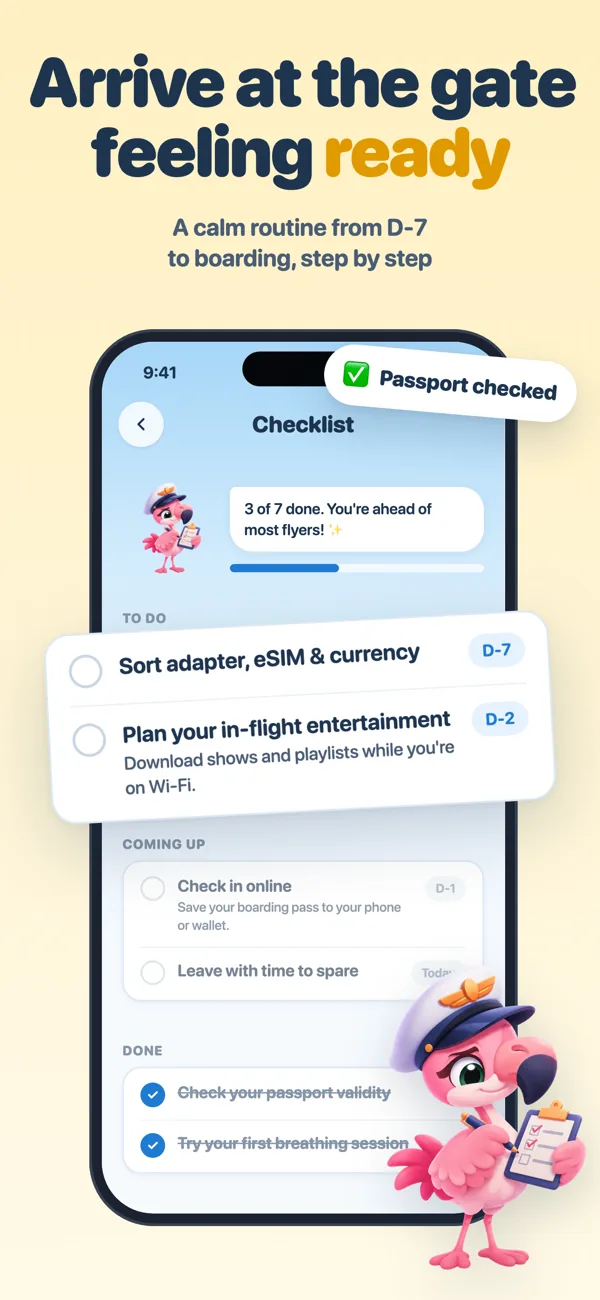
FlyNest's get-ready routine is built for the days you're living now. It takes you from a week before the flight to the moment you board, one step at a time: when to choose your seat, when to start your breathing practice, when to look at the forecast, what to pack, and a meditation for the gate. Your mind gets a next step instead of a "what if".
If you're not sure what makes your fear tick, the flight pattern quiz in the app shows which of eight patterns fits you, and shapes the plan around it.
What FlyNest doesn't do
FlyNest can't make the weeks before a flight worry-free, and it isn't a treatment for anxiety. It gives the wait a structure and gives you something to practise. If the anticipation is taking over your life, a doctor or a therapist is the right next step, and FlyNest can sit alongside that help.
Frequently asked questions
Why is the anticipation worse than the flight?
Because anxiety is mostly about the future, and a flight that is days away is all future. There's nothing to do yet, so the mind fills the time with pictures of what could go wrong. On the day, you have tasks, people and the flight itself to deal with, and many nervous flyers find the real thing is smaller than the one they imagined.
How do I stop worrying about a flight that's weeks away?
You probably won't stop it completely, and you don't need to. Give the worry a fixed daily time, give the days before a simple plan, and practise slow breathing each day so it's ready when you need it. If the worry is constant for weeks, talk to a doctor or therapist.
Is it normal to not be able to sleep before a flight?
Yes. Trouble sleeping is a common sign of anxiety. Keep your usual wake-up time, skip caffeine after 3pm, put your phone away before bed and breathe slowly if you're awake. A short night before a flight is uncomfortable, but you can still fly.
Should I cancel my flight because of anxiety?
Try not to decide in the middle of the night or at the height of the fear. Cancelling brings quick relief, but avoidance tends to make the next flight harder. If you can, go with a plan. If you decide this trip isn't possible, choose a smaller next step rather than giving up on flying.
How early should I start preparing for a flight if I'm nervous?
About a week before works well for many people: long enough to make breathing practice a habit and get the logistics done, without spending months dwelling on the trip.