
My plane aborted its takeoff: what a rejected takeoff is and why it's safe
The engines were roaring, the plane was racing down the runway, then hard braking and it stopped. That's a rejected takeoff, a trained procedure. Here is why pilots do it, what you feel, and what happens next.
The engines were at full power, the plane was racing down the runway, and then everything changed: the engines went quiet, then roared again, and you were thrown forward against your seatbelt as the plane braked hard. If your heart is still pounding, here is the most important thing: what you felt was a rejected takeoff, a procedure pilots train for and that every airline takeoff is planned around. The crew chose to stay on the ground.
Practical answer
- A rejected takeoff (pilots say "RTO", passengers often say "aborted takeoff") is when the crew stops the plane during the takeoff run.
- Before every takeoff, the crew calculates a decision speed called V1. Below it, the plane is planned to stop safely on the runway that's left.
- The FAA's training material estimates that about 1 takeoff in 3,000 ends in a rejected takeoff, and that over 75% of them start at 80 knots or less, where they almost never lead to an accident.
- The loud roar after the engines go quiet is usually reverse thrust helping the brakes. The hard push forward is the brakes doing their job.
- Afterwards the plane usually taxis off the runway and the crew explains what happens next. Breathe out slowly and wait for the announcement.
What a rejected takeoff is
A takeoff isn't a single "go" moment. It's a run with a plan attached. Before the plane leaves the gate, the pilots work out the speeds for that day's weight, weather and runway, including V1, the decision speed. SKYbrary, the safety reference used by pilots and air traffic controllers, explains the rule simply: if the crew decides to stop at or below V1, the plane should be able to stop safely on the runway. Above V1, the takeoff continues, and the plane is planned to climb away safely even if one engine fails.
That plan is written into the rules. US airline regulations (14 CFR 121.189) don't let a plane take off at a weight where the accelerate-stop distance, the distance to speed up to the decision point and then brake to a full stop, is longer than the runway available. The certification rule that defines that distance (14 CFR 25.109) even requires it to be demonstrated in flight tests with the brakes almost fully worn, and adds a safety margin of two seconds at decision speed.
So when your pilots stopped, they weren't improvising. They were using the option that was calculated, in writing, before you pushed back from the gate.
Why pilots stop a takeoff
SKYbrary lists the usual triggers: an engine problem, a warning light or other significant abnormality, or an instruction from air traffic control to stop, for example because something or someone is on or near the runway. Either pilot can usually call "stop", depending on the airline's procedures.
How readily they stop depends on speed:
- At low speed (before a check call, usually around 80 or 100 knots), pilots reject the takeoff for any significant issue. Stopping here is easy, which is why it's the safest moment to be cautious.
- At high speed, closer to V1, they only stop for something serious such as an engine failure or fire. Many modern planes even silence minor alerts during this phase so the crew isn't distracted by things that can wait.
That's why most rejected takeoffs happen early. The FAA's Takeoff Safety Training Aid reports that over 75% of them begin at 80 knots or less, and only about 2% above 120 knots.
If your mind jumps from this to crash statistics, read the real odds of a plane crash, from IATA's latest figures.
What you feel and hear, step by step
The FAA training aid describes the crew's first actions as almost simultaneous: maximum braking, thrust levers to idle, and speedbrakes up. Each one has a sensation.
- The engines suddenly go quiet. The pilots pull the thrust levers back to idle.
- You're pushed forward against your seatbelt. On many airliners an "RTO autobrake" setting applies maximum braking automatically the moment the thrust is cut at speed, so the stop is firm and immediate.
- A whoosh or thump from the wings. Spoilers (speedbrakes) pop up on top of the wings to press the plane onto the runway so the brakes grip better.
- A loud roar again. This is often reverse thrust: the engines push air forward to help slow the plane. It sounds like the takeoff restarting, but it's the opposite.
- The plane stops, then usually taxis off the runway. The crew runs checklists, talks with air traffic control and decides what to do next.
- An announcement. Pilots fly first and talk second, so a minute or two of silence is normal.
What happens after the stop
It depends on why the crew stopped. After a low-speed stop for a minor issue, the plane may return to the gate, an engineer may check things, and you may leave a bit later. After a high-speed stop, the brakes have absorbed a lot of energy and get very hot. The FAA training aid explains that airliner wheels have fuse plugs that melt and let the tyre pressure out safely if the brakes get too hot, and that manufacturers publish cooling times before the plane can take off again. So a longer wait, or a change of aircraft, is a sign of the system being careful, not of something hidden.
In the rare case of a real hazard such as a fire, the crew may evacuate on the runway. Cabin crew will tell you clearly if that's needed. Until then, staying seated with your belt on is exactly right.
What to do in the moment
- Breathe out longer than you breathe in. A slow exhale tells your body the danger has passed. Try our breathing exercises for flying.
- Name what happened: "That was a rejected takeoff. Brakes, spoilers, reverse. We stopped because the plan said stop."
- Watch the cabin crew. They train for this and will carry on calmly.
- Press your feet into the floor and feel the seat under you while you wait for the announcement.
- If panic builds, follow the steps in what to do during a panic attack on a plane.
The airborne cousin of this procedure is the go-around, when pilots stop a landing and climb away. It's explained in my plane aborted its landing. And if a flash and a bang on climb-out scared you, read what happens when a plane is struck by lightning.
How FlyNest helps
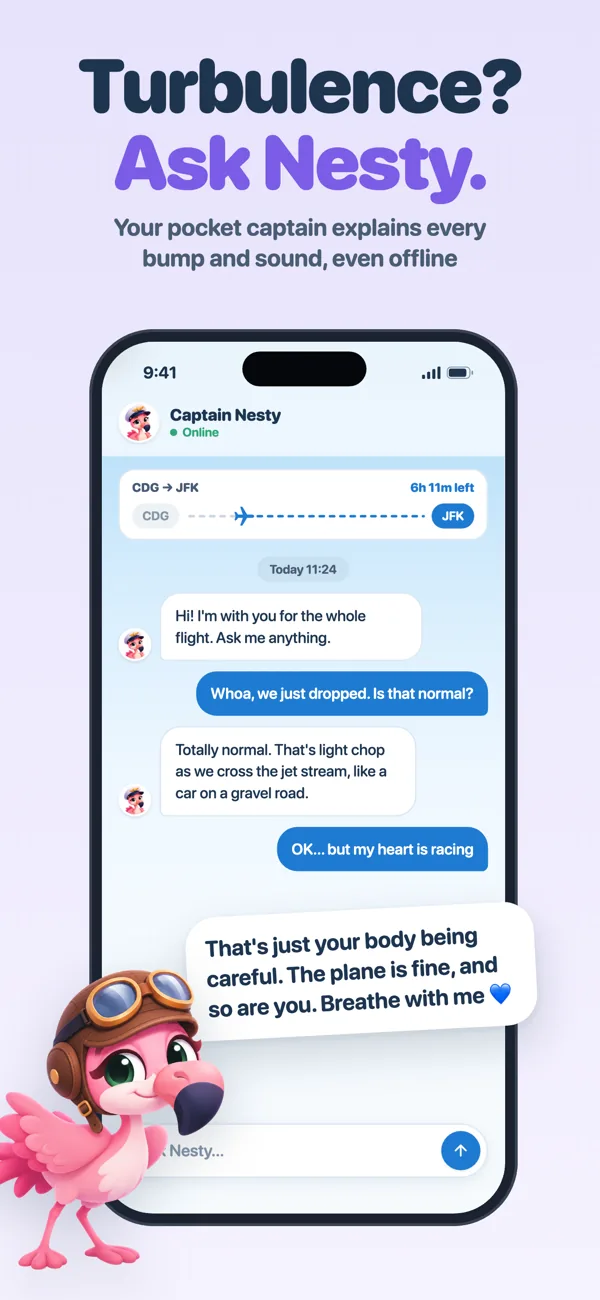
- Ask Nesty "Why did we just stop on the runway?" and get a calm, plain-language answer while you wait for the crew. See Ask Nesty, your pocket captain.
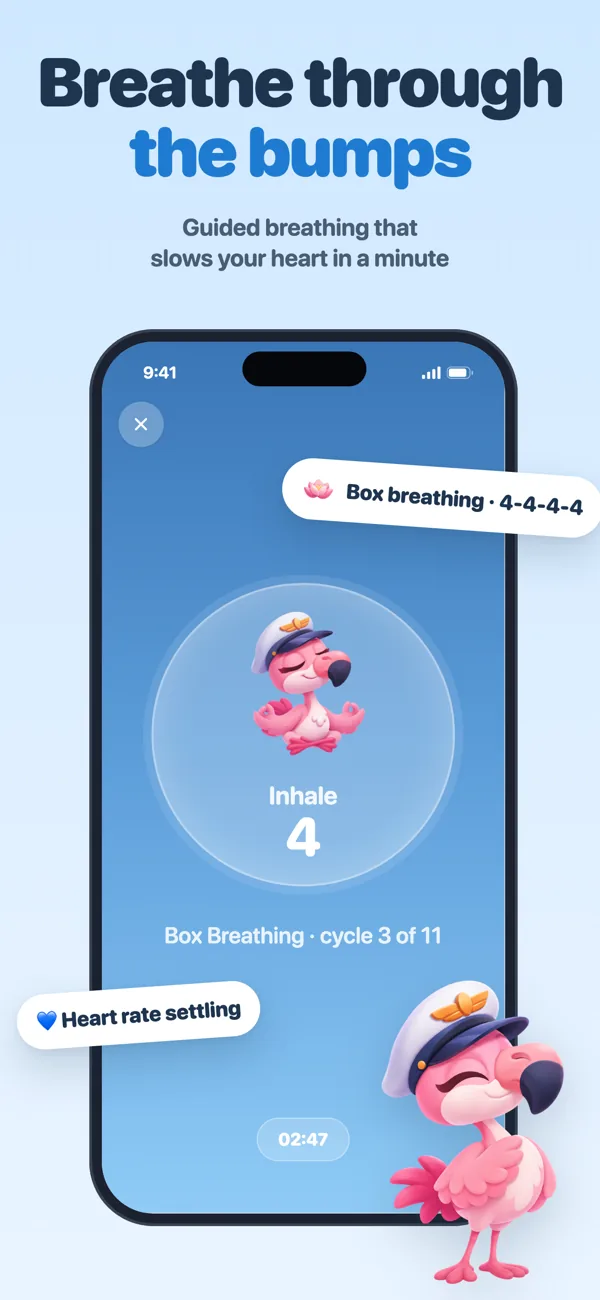
- Guided breathing and meditations for takeoff, for the minutes before the second attempt.
- A library of short reads about the sounds, bumps and safety of flying, to read before your next takeoff so a sudden change is easier to name. Pair it with a pre-flight plan for the days before.
- A "You made it!" moment after landing, so the day is remembered as a flight you got through.
What FlyNest doesn't do
FlyNest can't tell you why your particular takeoff was stopped, and it doesn't hear what your pilots and air traffic control are saying. The crew's announcement is always the official word, and the decision to fly again belongs to the airline and its engineers. FlyNest helps you understand what's normal and calm your body while you wait. If fear of flying is affecting your life, talking to a doctor or a therapist can really help.
Frequently asked questions
Is a rejected takeoff dangerous?
It's a planned, trained procedure. Every airline takeoff is calculated so the plane can stop on the runway if the decision is made by V1. The FAA's training material notes that the large majority of rejected takeoffs start at low speed and almost never result in an accident.
How common is an aborted takeoff?
The FAA Takeoff Safety Training Aid estimates about one rejected takeoff per 3,000 takeoffs. It works out that a short-haul pilot might see one every three years, and a long-haul pilot one every 30 years.
Why did my plane stop on the runway?
Usually because of a warning light, an engine indication, or an instruction from air traffic control. At low speed, pilots stop for any significant issue because stopping is easy. The crew normally explains in an announcement once the plane is safely stopped.
Why was there a loud roar after the plane started braking?
That's usually reverse thrust: the engines redirect their airflow forward to help slow the plane. It sounds like power coming back, but it's helping the brakes.
Will we take off again?
Often, yes, once the crew and engineers are satisfied. After a high-speed stop the brakes need time to cool, so it can take a while, and sometimes the airline swaps the aircraft. Both are normal, careful steps.