
My plane aborted its landing: what a go-around is and why it's safe
Your plane was about to land, then the engines roared and it climbed away. That's a go-around, a normal, trained maneuver. Here is why pilots do it, what you feel, and how to stay calm until the second landing.
The runway was right there. Then the engines roared, the nose came up and the plane climbed away from the ground. If you're reading this on board, or still shaken after landing, here is the most important thing: what you felt was a go-around, a normal maneuver that every airline pilot trains for. It means the crew chose the safer option.
Practical answer
- A go-around (also called an aborted or rejected landing) is when pilots stop an approach and climb away to try again.
- The FAA calls it "a normal maneuver" and teaches that any approach or landing may end in one.
- Common reasons: another aircraft still on the runway, an air traffic control instruction, gusty wind, or an approach that isn't perfectly lined up.
- The loud engines, the steep climb and the thumps you hear are the planned steps of the procedure.
- Most of the time the plane flies a loop and lands a few minutes later. Breathe out slowly and follow the progress on a map.
What a go-around is
Airline pilots don't land "no matter what". On every approach they check that the plane is on the right path, at the right speed and properly set up for landing. The FAA's Airplane Flying Handbook says pilots typically go around if the approach isn't stable by 1,000 feet above the airport in cloud, or 500 feet in clear weather. If something doesn't match, the answer is simple: don't land, climb, and come back.
The handbook is explicit that this is routine, not a sign of a bad crew. It lists the usual reasons to break off a landing: air traffic control requirements, something unexpected on the runway, catching up with the aircraft ahead, wind shear, wake turbulence from a previous plane, a technical issue, or an approach that isn't stable. It also calls the idea that an aborted landing always means poor skill "a fallacy".
SKYbrary, the aviation safety reference used by pilots and controllers, adds that a go-around can be called by the crew or directed by air traffic control, and can happen anywhere from the final approach to wheels on the runway.
Why going around is the safe choice
This is the part that matters most for an anxious mind: safety experts want pilots to go around more often, not less. A Flight Safety Foundation study found that most runway excursions (a plane running off the end or side of a runway) could have been avoided by a decision to go around. That's why airlines write it into their rules: if the approach isn't right, go around.
So when your pilots climbed away, they weren't escaping a disaster at the last second. They were following the rule designed to keep landings boringly safe. The same study notes that go-arounds are fairly rare in a pilot's working life: a short-haul pilot might fly one or two a year, and a long-haul pilot one every two to three years. Rare, but trained for in the simulator.
If your mind jumps to crash statistics, it may help to read the real odds of a plane crash, from IATA's latest figures.
What you feel and hear, step by step
The FAA teaches the go-around in three steps: power, attitude, configuration. Each one has a sensation you may have noticed.
- The engines roar. Pilots set full takeoff power straight away to stop the descent. It's loud and sudden, and that's on purpose.
- You're pushed into your seat and the nose rises. The plane changes from a gentle descent to a climb, like a second takeoff.
- Whirring sounds. The flaps on the wings are raised in small steps as the plane speeds up.
- A thump under the floor. Once the plane is climbing steadily, the landing gear folds up, the same clunk you hear after a normal takeoff.
- A turn and a quieter phase. The crew follows a published missed-approach route, talks with air traffic control and sets up for the next approach.
- An announcement. Often a few minutes later, once the busy part is done. Pilots fly first and talk second, so silence at first is normal.
Then the plane flies a new approach and lands, or, more rarely, goes to a nearby airport if the weather at the first one isn't suitable.
What to do in the moment
- Breathe out longer than you breathe in. A slow exhale tells your body the threat has passed. Try our breathing exercises for flying.
- Name what's happening: "That's a go-around. Power, climb, gear up. We'll try again."
- Look at the crew. Cabin crew carry on calmly because, for them, this is ordinary.
- Feel your feet on the floor and your back against the seat while the plane climbs.
- If panic builds, follow the steps in what to do during a panic attack on a plane.
After you land
It's common to feel shaky or tearful once you're on the ground, and to worry about the next flight. That reaction is your body catching up, not a sign that something went wrong. If it keeps coming back, our guide to flight anxiety explains why the fear sticks and what helps it fade.
And if the takeoff is stopped?
The ground version is a rejected takeoff: the crew stops the plane during the takeoff roll. Hard braking and loud engine noise can feel dramatic, but it's another trained procedure. SKYbrary explains that before takeoff the crew calculates a decision speed (V1). Below it, the plane can safely stop on the runway; above it, the plane continues and climbs away. At lower speeds the crew will stop for any significant issue; at high speed, only for a serious one. Either way, the plane then taxis off the runway and the crew explains what happens next. We explain it step by step in my plane aborted its takeoff.
How FlyNest helps
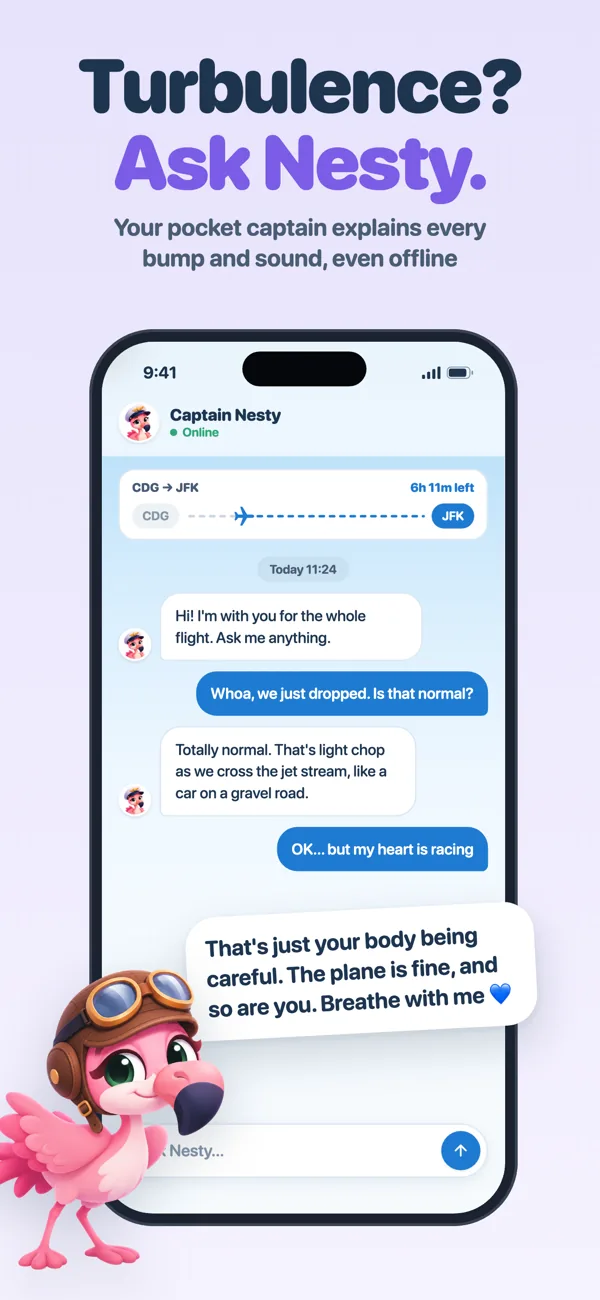
- Ask Nesty "Why did we just climb away from the runway?" and get a calm, plain-language answer that knows your flight phase. See Ask Nesty, your pocket captain.
- A live flight map that works offline, so you can watch the loop and the new approach instead of imagining it.
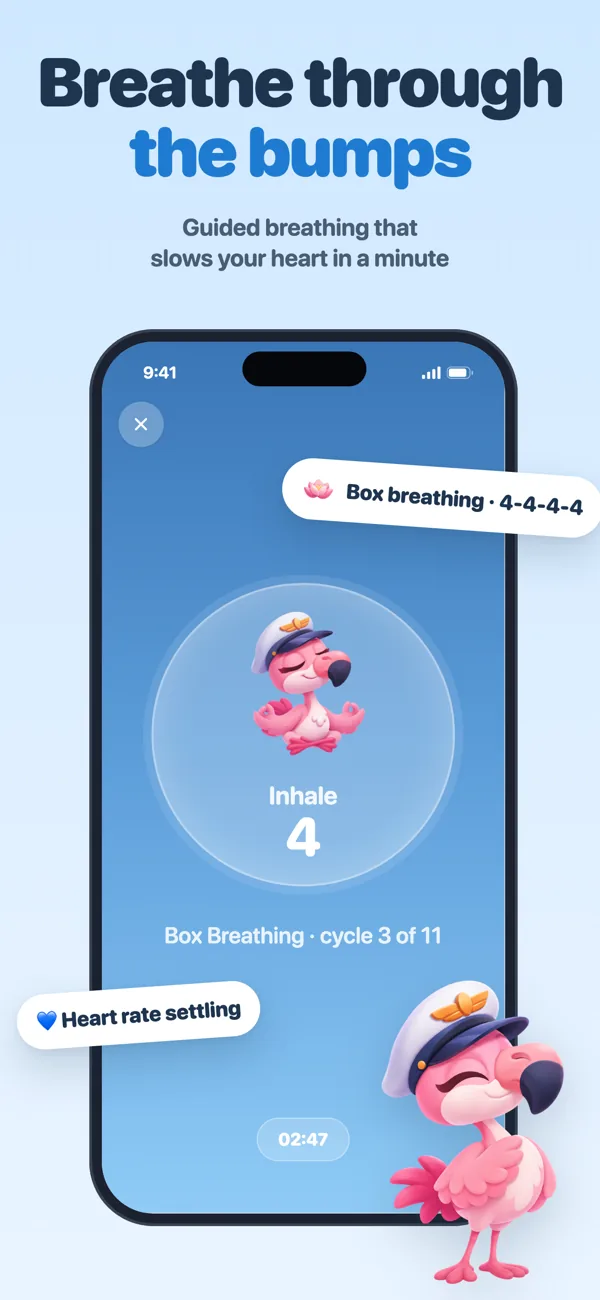
- Guided breathing and meditations for landing, for the minutes before the second touchdown.
- A "You made it!" moment after landing, so the flight is remembered as one you got through.
What FlyNest doesn't do
FlyNest can't tell you in advance whether your flight will go around, and it doesn't know what your pilots are discussing with air traffic control. Your crew's announcement is always the official word. FlyNest helps you understand what's normal and calm your body while you wait. If fear of flying is affecting your life, talking to a doctor or a therapist can really help.
Frequently asked questions
Is a go-around dangerous?
The FAA describes the go-around as a normal maneuver that pilots practise from their first lessons. It's the safety option when a landing isn't right, and airline crews rehearse it in the simulator.
Why did my plane abort its landing?
Usually because of another aircraft still on the runway, an instruction from air traffic control, gusty wind, or an approach that wasn't perfectly stable. The pilot often explains in an announcement a few minutes later.
How long does a go-around take?
It depends on the airport and traffic. Often the plane flies a loop around the airport and lands on the next approach; at busy airports it can take a little longer to fit back into the line of arrivals.
Why were the engines so loud?
Pilots set full takeoff power to stop the descent and climb. It's the same power you hear at takeoff, just unexpected.
Do pilots get in trouble for going around?
No. Safety bodies such as the Flight Safety Foundation encourage pilots to go around whenever an approach isn't right. It's seen as good airmanship.