
How to deal with turbulence anxiety: a calm plan for the bumps
Scared of turbulence? Here is a simple plan for before, during and after the bumps: what your body is doing, the one rule that keeps you safe, and steps to calm down while the plane shakes.
The seat belt sign chimes, the cabin starts to shake and your stomach drops. Your hands grip the armrest and your mind runs ahead to the worst. If this is you, you're far from alone: turbulence is the trigger nervous flyers mention most. The good news is that turbulence anxiety responds well to a plan, and the plan is simpler than the fear.
Practical answer
- Turbulence is moving air. It feels dramatic, but airliners are designed to handle far more than the bumps you feel in normal flight.
- The real safety rule is short: keep your seat belt fastened whenever you're seated. The injuries that do happen in turbulence are mostly to people who are standing or unbelted.
- During the bumps: belt on, feet flat, breathe out longer than you breathe in, name what's happening, and let the movement pass through you.
- Before the flight: check the turbulence forecast for your route so the bumps are expected, not a surprise.
- If the fear stops you flying or ruins trips, talking therapies such as CBT can really help.
Why turbulence sets off your alarm
Turbulence hits several fear buttons at once. You can't see it coming, you can't step away from it, and your inner ear reads a sudden drop as falling. Your body responds the way it's built to: a fast heartbeat, tight muscles, quick shallow breaths. Those sensations then feel like proof that something is wrong, and the loop feeds itself.
That alarm is real, but it's measuring the wrong thing. It measures movement, not danger. The plane is moving through uneven air the way a boat moves over small waves. For the full picture of what turbulence is and how much the plane really moves, read Is turbulence dangerous?. For why the fear sticks even when you know the facts, see our guide to flight anxiety.
The facts that help most in the moment
You don't need a physics lesson while the cabin shakes. Three facts are enough.
The plane is built for much more. US certification rules for airliners (14 CFR 25.337) require the structure to be designed for maneuvering loads of at least 2.5 times the plane's weight, and 14 CFR 25.303 then adds a 1.5 factor of safety on top. Ordinary turbulence stays well inside that.
Your belt is the safety system. The FAA's own advice for passengers is to keep the seat belt buckled at all times while seated, and to listen to the crew. In the NTSB's study of turbulence accidents on US airlines from 2009 to 2018, only 1 of the 26 seriously injured passengers was documented as wearing a seat belt.
Crew are the people most at risk, and they are calm. The FAA's table of serious turbulence injuries on US airlines from 2009 to 2024 lists 166 crew members and 40 passengers, over sixteen years of flying. Crew get hurt more because they're often standing in the aisle with carts. When they sit down and buckle up, it's a precaution, not a sign of danger.
What to do when the bumps start
- Fasten your belt snugly, low across your hips. This is your one real job. Once it's done, you've done the thing that keeps you safe.
- Put both feet flat on the floor and let your back rest against the seat. Give your body a firm, steady contact point instead of bracing against the motion.
- Breathe out slowly. The NHS suggests breathing in gently through the nose and out through the mouth, counting steadily from 1 to 5 each way. A long, slow out-breath tells your body the danger has passed. Our breathing exercises for flying guide you through it.
- Unclench your hands and shoulders. Holding on tight makes every bump feel bigger. Let your arms rest and let the seat move you.
- Name what's happening. "This is turbulence. The plane is fine. My body is reacting to movement." Saying it, even silently, turns an unknown into something familiar.
- Watch something steady. A drink in a cup, the crew in their seats, or a moving map. Notice how small the real movement is compared with the feeling.
- Ride it in short chunks. Turbulence comes in patches. Tell yourself "just the next minute" and count breaths until it eases.
If the fear turns into a wave of panic, with a racing heart, tingling or a feeling you need to escape, follow the steps in what to do during a panic attack on a plane.
Before your next flight
Most of turbulence anxiety lives in the days before the trip. A little preparation shrinks it.
- Check the forecast for your route. Our free turbulence forecast shows where bumps are likely, so a bumpy patch becomes "the one I expected over the mountains". How to read a turbulence forecast explains the colours.
- Choose your seat. Seats over the wings usually feel the movement less than the back of the plane. See the best seat for turbulence.
- Plan your calm kit. Headphones, a downloaded playlist or meditation, and something to hold your attention for the bumpy minutes.
- Learn the shapes of turbulence. Knowing about clear-air turbulence, the kind that arrives under a blue sky, means it won't feel like a sign that something broke.
After the flight
You may feel shaky or drained once you land, even if the bumps were mild. That's your body coming down from high alert, not a sign that the flight was dangerous. Notice that you got through it: that memory is what slowly retrains the alarm.
If turbulence fear keeps you off planes, stops you sleeping before trips or makes flights miserable, it's worth getting help. The NHS lists talking therapies such as cognitive behavioural therapy (CBT) and hypnotherapy among the treatments for phobias, and in England you can refer yourself to an NHS talking therapies service without seeing a GP. Our guide to fear of flying therapy shows what CBT, exposure and virtual reality involve and what the studies found. Our roundup of the best fear of flying courses covers structured options from airlines and specialists.
How FlyNest helps
- A live, offline flight map shows where you are and how much of the flight is left, so a bumpy patch becomes a dot moving forward on a line. See the live flight map.
- Ask Nesty "Why is it bumpy right now?" and get a calm, plain-language answer that knows your flight phase. See Ask Nesty, your pocket captain.
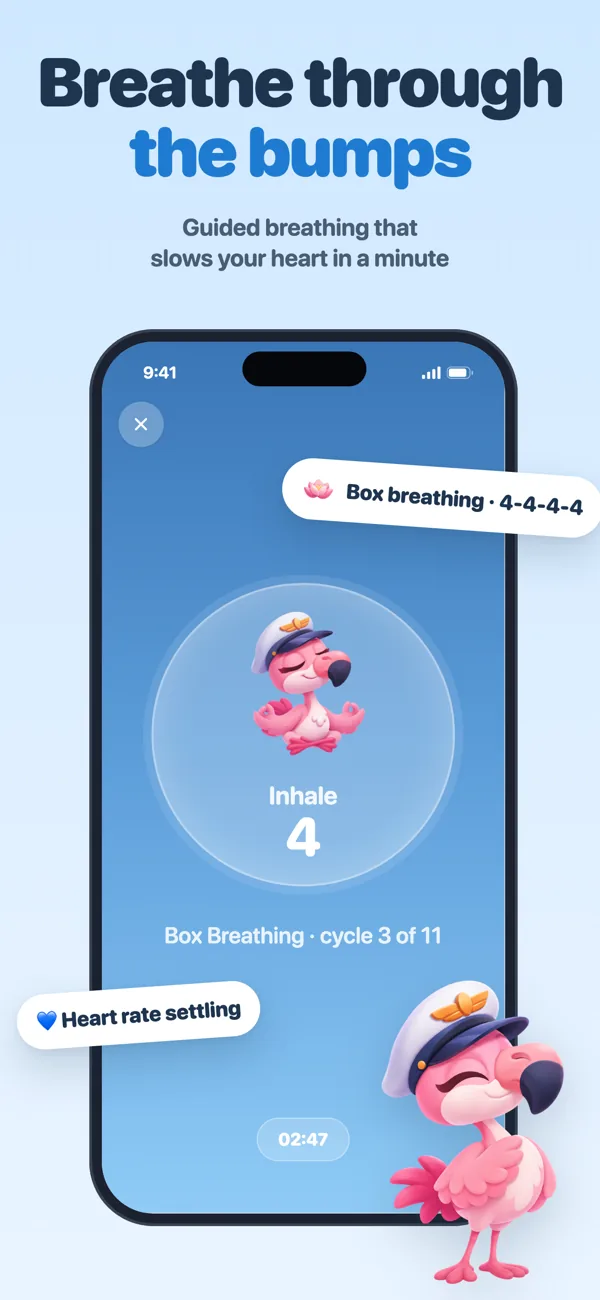
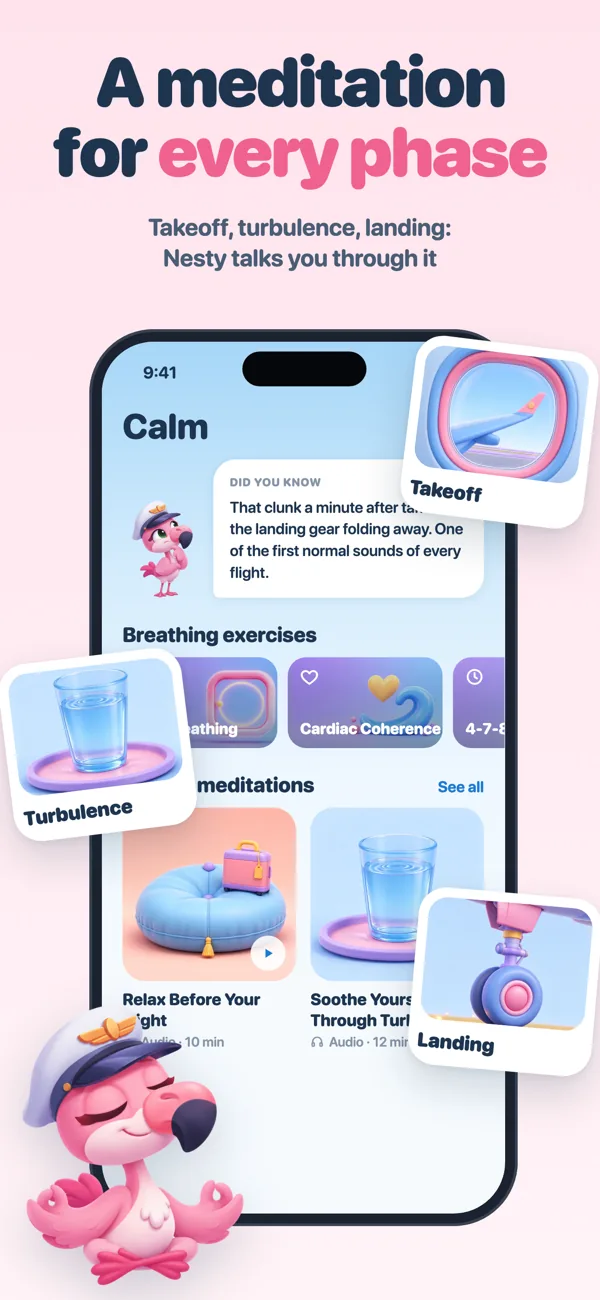
- Guided breathing and turbulence meditations you can start with one tap when the seat belt sign comes on.
- A route turbulence check before you fly, so you know roughly when to expect the bumps.
What FlyNest doesn't do
FlyNest can't predict every bump. Forecasts show where turbulence is likely, not exactly when your plane will meet it, and clear-air turbulence can still surprise everyone. FlyNest doesn't talk to your pilots either: the crew's instructions always come first. What it does is help you understand what's normal and calm your body while it happens. If anxiety is severe or affecting your life, please talk to a doctor or a therapist.
Frequently asked questions
Why am I so scared of turbulence?
Turbulence combines things the brain dislikes: sudden movement, no warning and no control. Your inner ear reads drops as falling and your body reacts before your thinking mind can explain. The fear is a normal alarm response, and it can be retrained with knowledge and practice.
Can turbulence make a plane crash?
Ordinary turbulence is a comfort issue for the aircraft. Airliners are certified to handle loads well beyond what normal bumps produce. The main risk is to people who aren't belted, which is why the seat belt rule matters. Our guide Is turbulence dangerous? goes through the evidence.
What should I do during severe turbulence?
The same as during mild turbulence: stay seated, keep your belt fastened tightly, follow the crew's instructions and breathe slowly. Don't try to stand up or reach for the overhead bin until the crew says it's safe.
Does sitting at the front help with turbulence anxiety?
Seats over the wings usually move the least. Some people prefer a window to see the horizon, others an aisle so they feel less boxed in. Pick whatever makes you feel most in control.
Will the fear of turbulence ever go away?
For many people it shrinks a lot. Learning what turbulence is, practising calm breathing and flying more often all help. If it stays strong, CBT and structured fear of flying courses have helped many nervous flyers.